

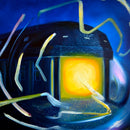
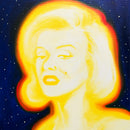
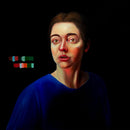
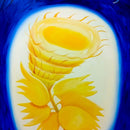
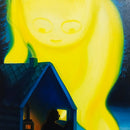




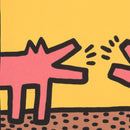
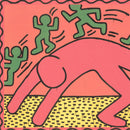
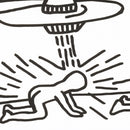


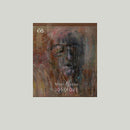







Gouache 1998, 41.5x52 cm, framed 62x72 cm
Download Josef Jíra's works catalog
About the author:
The name of Josef Jíra, the so-called "Chagall of Malá Skála," is associated with the Podkrkonoší region, and an extraordinary distinctiveness and originality, both artistic and human.
The artist's life experiences always intertwined with his painting. As he himself stated: "I would never have been able to create any painting in my life without connecting to a particular place, a specific memory, or an experience."
Josef Jíra's paintings emerge from intensely experienced internal conflicts and personal struggles, which transform into a strongly emotional statement in his work. His painting is charged with tension, emotional excitement, and dramatic pathos with a hint of romantic pathos. The expressive foundation of Jíra's work – energetic, rhythmic brushwork and colors that appear restless and subconscious – has its roots in the visionary currents of Expressionism.
Josef Jíra was born in Turnov in 1929 but spent his childhood with his parents in Malá Skála. His sensitivity to imagery was shaped by the rural environment and family background, as well as the landscape around Horky, where his paternal grandparents lived. It was there that he encountered archaic rituals of the Easter period and the traditional way of life in a Podkrkonoší village, which left a deep and lasting impression on him.
As Hrabal noted about the artist's work: "His graphic prints and canvases are always a place not only of victory and balanced fusion, but also a place of shipwreck. One could say about Josef Jíra's paintings that they are series of one Stations of the Cross, that they are dramas that push mundane reality beyond the frame's edge. That is why Josef Jíra is always bristly and constantly on guard; he can only create when his human problems have matured, when conflicting situations have sharpened enough to burst with colorful and graphic
flaps."
B.H., Prague 1978
