





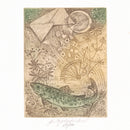
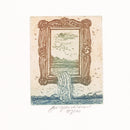
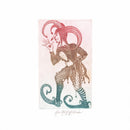
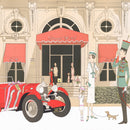
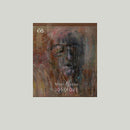
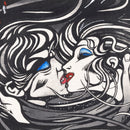
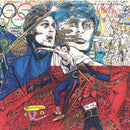
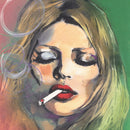
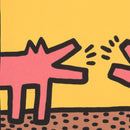
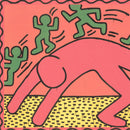
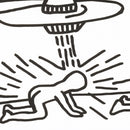








Graphic print 50x65 cm in a limited edition. Print no. 71/200. Blind stamp SPADEM PARIS. Loose sheet. Arches paper. License: Spadem Paris
About the author:
Mark Rothko (1903–1970) was an American painter known for his abstract canvases with blocks of vibrant colors. The 1956 work Orange and Yellow is a typical example of Rothko's method of using thin layers of oil paint to create luminosity. Mark Rothko said that art for him was an anecdote of the spirit and the only means to embody the purpose of its diverse speed and tranquility.
Born Marcus Yakovlevich Rothkowitz on September 25, 1903, to a Jewish family in Latvia. He was raised in an Orthodox Jewish environment, attending a school where Hebrew was taught. Due to rising anti-Semitic sentiments, his father emigrated to Portland, USA, in 1910, and the whole family moved there three years later. Rothko studied at Yale University on a scholarship for only one year before dropping out and moving to New York.
Here, he began studying drawing from a model at the Art Students League of New York and also attended anatomy and theater studies courses. His teacher was the painter Max Weber, which is why Rothko's paintings from that period have a realistic basis and expressive character.
During this period, Rothko created a series of figurative paintings and interiors. In the late 1940s, he transitioned to non-figurative abstraction, creating masses of pure colors instead of figures in space.
