








SALVADOR DALÍ
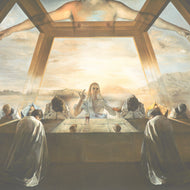
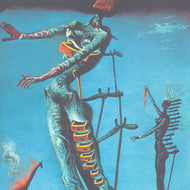
Salvador Dalí (1904-1989) was a Spanish Surrealist artist renowned for his technical skill, precise draftsmanship, and striking, often bizarre, imagery in his works. He began his artistic career studying at the Academia de San Fernando in Madrid, where he came into conflict with the school's administration and was expelled in 1926. He traveled to Paris, where he connected with Pablo Picasso and soon after became a member of the Parisian Surrealist group.
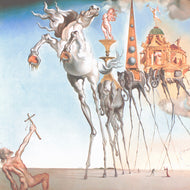
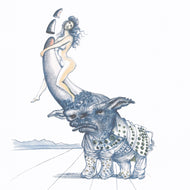
He was known for his unique Surrealist style, characterized by melting clocks, elephants on slender legs, and ants. Dalí's works were strongly influenced by Sigmund Freud's theory of psychoanalysis and the Old Masters. In addition to painting, he also engaged in film, graphic art, sculpture, and design. He collaborated with a number of prominent figures, including Luis Buñuel, Walt Disney, and Alfred Hitchcock.
During World War II, Salvador Dalí went to the USA, where he remained until 1948. In America, he published his autobiography and continued his work, which often reflected his religious interest and mysticism. He died on January 23, 1989, in his hometown of Figueres, Spain. His life and work had a significant impact on other Surrealists, pop art, popular culture, and contemporary artists such as Jeff Koons and Damien Hirst. Salvador Dalí is considered one of the most important Surrealist painters of the 20th century.