











FERNANDO BOTERO 25 Feb — 6 Apr 25
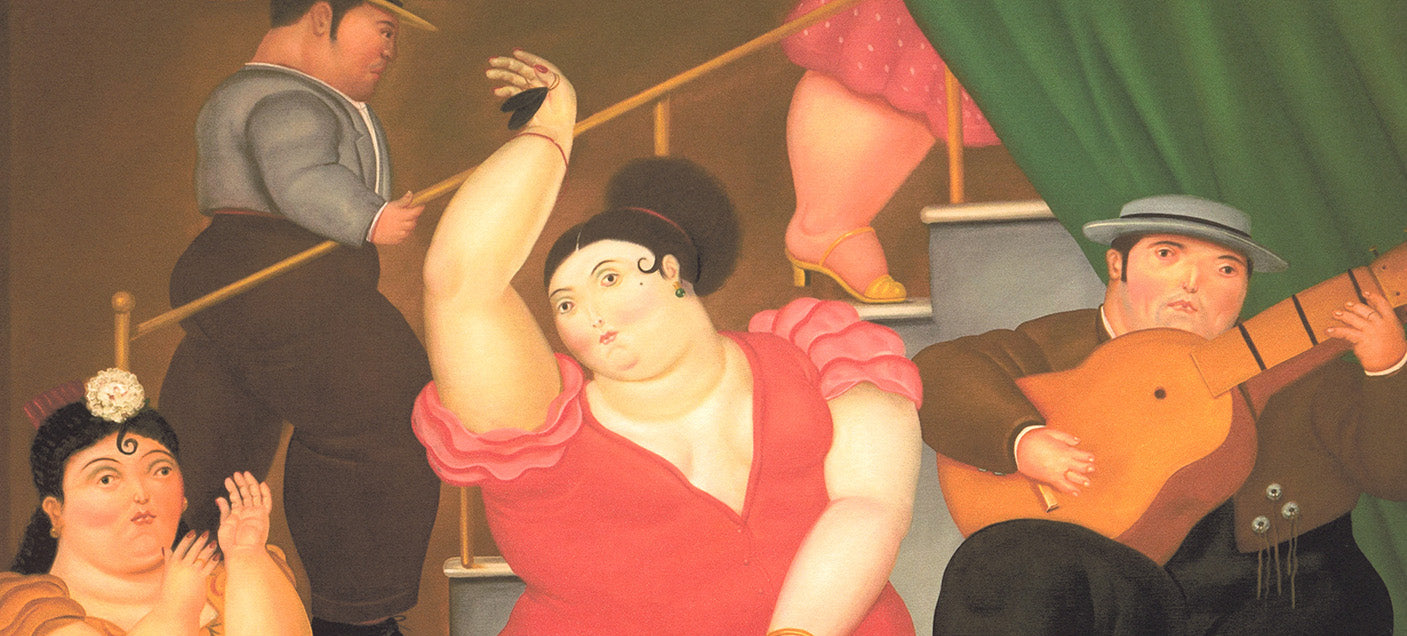
Fernando Botero (1932–2023) was a Colombian figurative artist and sculptor. His characteristic style, also known as "boterismo", depicting people and figures in large, even exaggerated, volumes, is often interpreted as sharp social or political criticism. He was considered the most respected and cited artist from Latin America during his lifetime, and his works can be found in many places around the world at different times - for example, on Park Avenue in New York or on the Champs-Élysées in Paris.
"A person takes a certain position intuitively, only later trying to rationalize or even justify it."
Fernando Botero
Botero, who described himself as "the most Colombian of Colombian artists", came to national attention when he won first prize at the Salón de Artistas Colombianos in 1958. After moving to Paris in 1973, he began creating sculptures and achieved international recognition in the 1990s with exhibitions around the world. His works are collected by many major international museums, corporations and private collectors and sell for millions of dollars. In 2012, he received the Lifetime Achievement Award in Contemporary Sculpture from the International Sculpture Center in New Jersey, USA.
Fernando Botero was born on April 19, 1932, in Medellín, Colombia, and grew up surrounded by Spanish colonial architecture and pre-Columbian artifacts. He originally trained as a matador, but left the profession after two years to pursue art. In the early 1950s, he traveled to Europe, where he copied works by Francisco de Goya and Diego Velázquez at the Prado Museum in Madrid, and studied the paintings of Paolo Uccello and Piero della Francesca in Italy.
In 1960, he moved to New York City, where he experimented with the gestural brushstrokes of the New York School painters. This stylistic adventure was short-lived, and by the 1970s Botero had settled into the technique for which he became famous. Fernando Botero lived and worked in Paris, France, New York, and Tuscany, Italy. His works are currently in the collections of the Museum of Modern Art in New York, the Art Institute of Chicago, and the Museo Botero in Bogotá, which is dedicated to the artist and his work.
